
Welcome to Home Well Zone. Feeling busy but unable to start? Task paralysis is a growing mental challenge in today’s fast-paced world. This article explains why it happens and shares simple, practical ways to regain focus, reduce overwhelm, and move forward—one small step at a time.
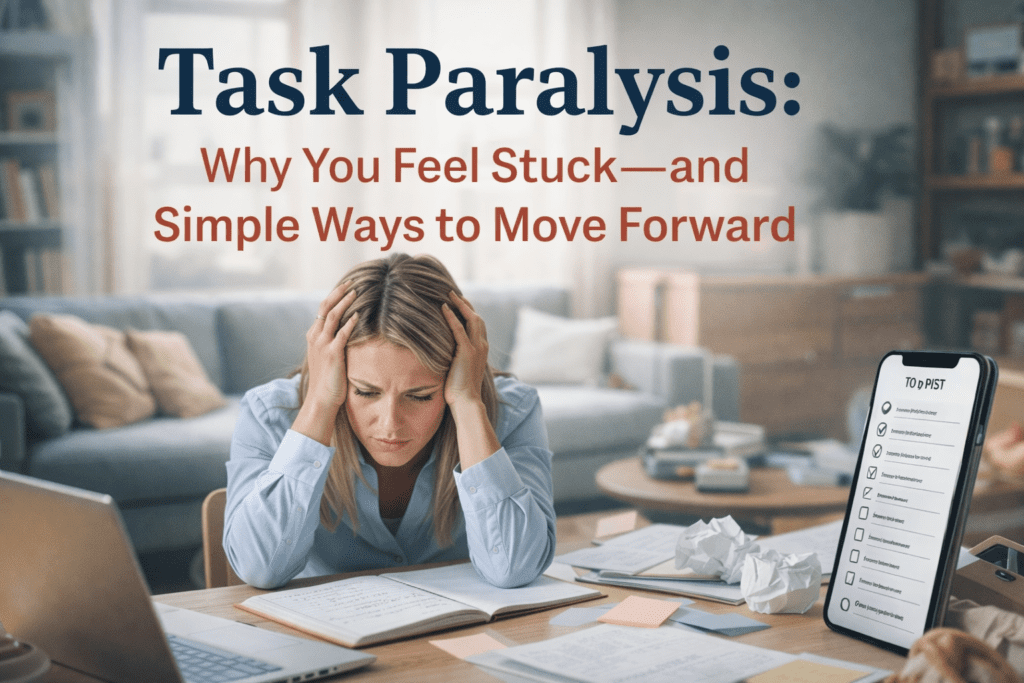
Have you ever opened your to-do list, stared at it for minutes, and still done nothing?
You’re not lazy. You’re not unmotivated. You may be experiencing task paralysis.
Task paralysis happens when the brain feels overloaded and shuts down instead of taking action. In today’s always-on world—filled with deadlines, notifications, and pressure—this experience is becoming increasingly common.
This guide explains what task paralysis really is, why it happens, and how you can gently break free—without forcing productivity or burning yourself out.
Read More: What is task paralysis?
What Is Task Paralysis?
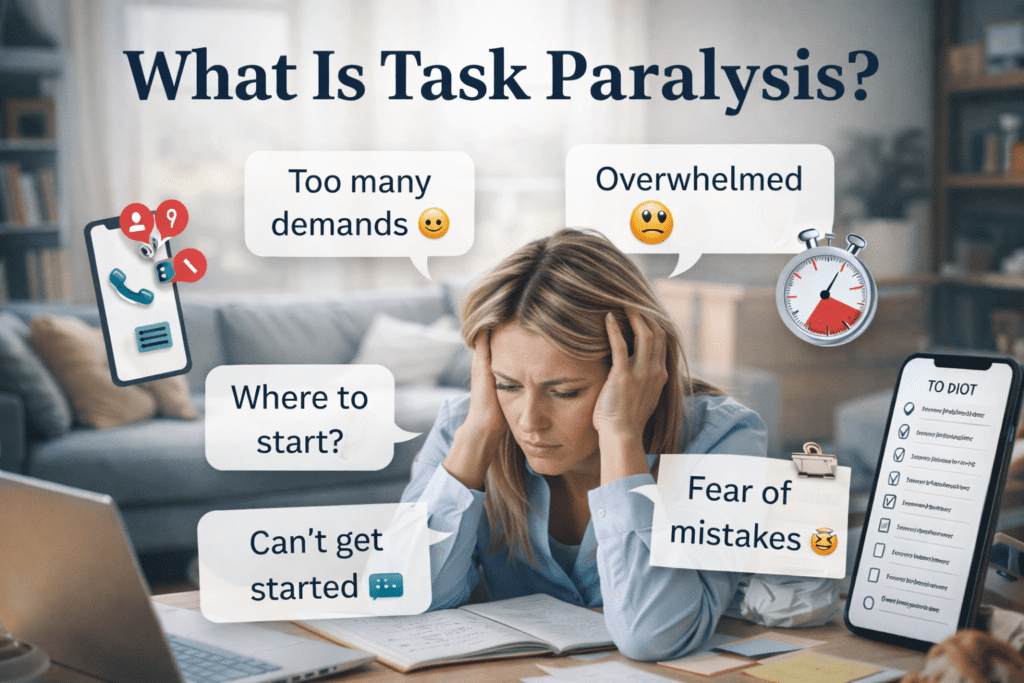
Task paralysis is the inability to start a task, even when you want to.
The brain feels overwhelmed by choices, pressure, or expectations and responds by freezing.
Instead of moving forward, you may:
- Scroll on your phone
- Avoid the task entirely
- Feel guilty for not starting
- Promise yourself you’ll do it “later”
The problem isn’t effort. It’s overload.
Why Task Paralysis Happens More Often Today
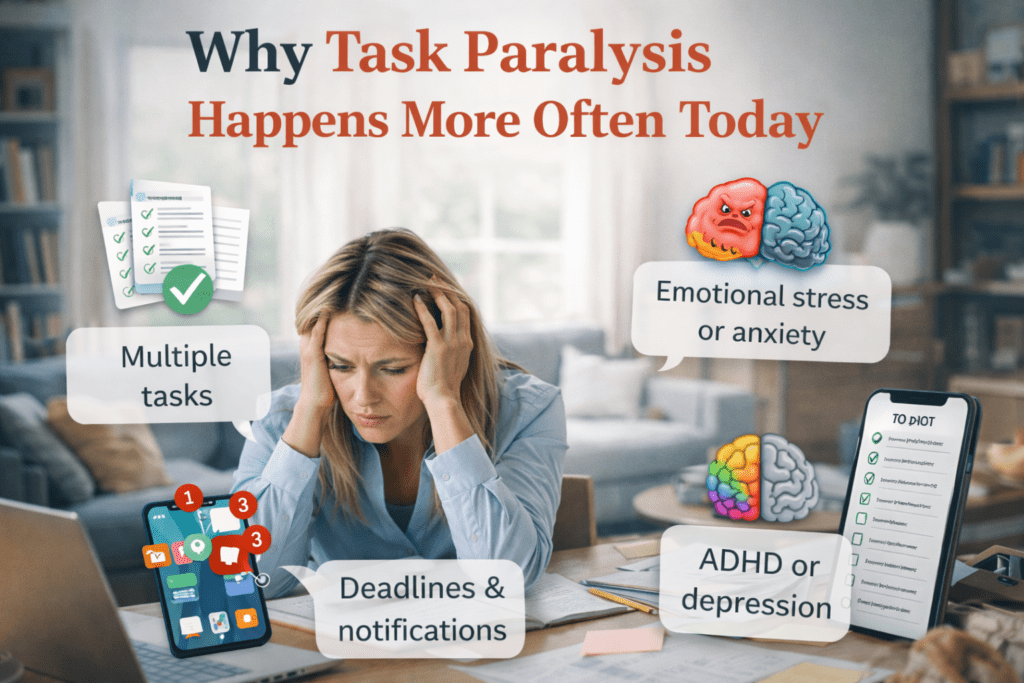
Modern life constantly demands attention. Multiple tasks, urgent messages, and unrealistic productivity expectations overload the brain’s decision-making system.
Common triggers include:
- Too many tasks at once
- Unclear or large goals
- Fear of making mistakes
- Emotional stress or anxiety
- ADHD or depression
When the brain can’t decide what to do first, it often chooses to do nothing.
Task Paralysis and ADHD: What’s the Connection?
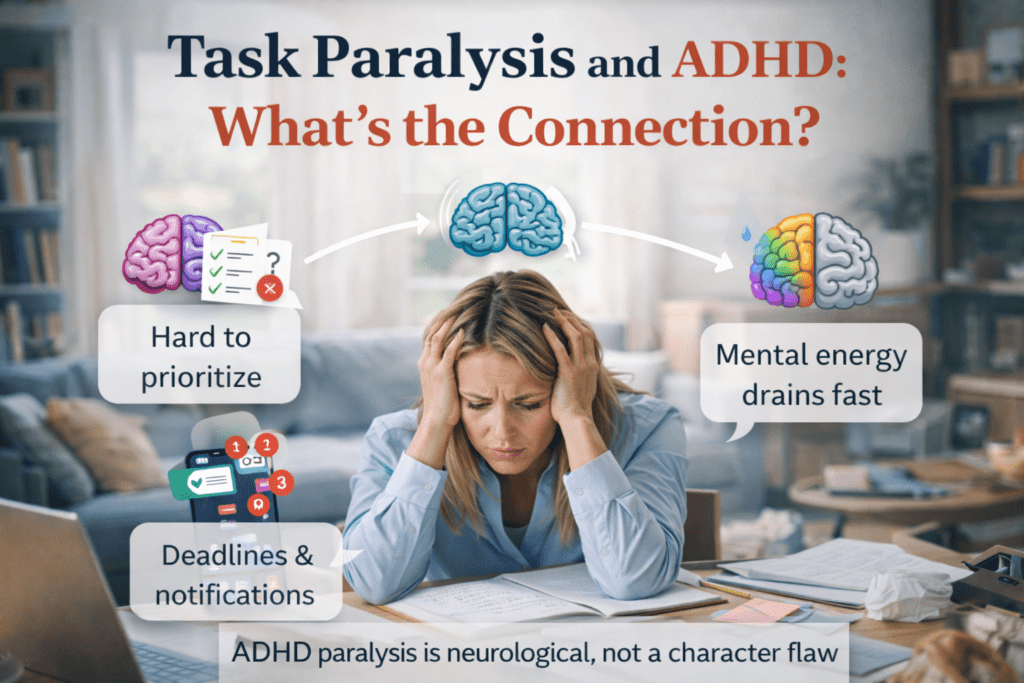
Task paralysis is especially common in people with ADHD.
The ADHD brain struggles with prioritization, task initiation, and time perception.
This means:
- Starting feels harder than finishing
- Everything feels equally urgent
- Mental energy drains quickly
Importantly, ADHD paralysis is neurological, not a character flaw.
How Task Paralysis Feels in Everyday Life
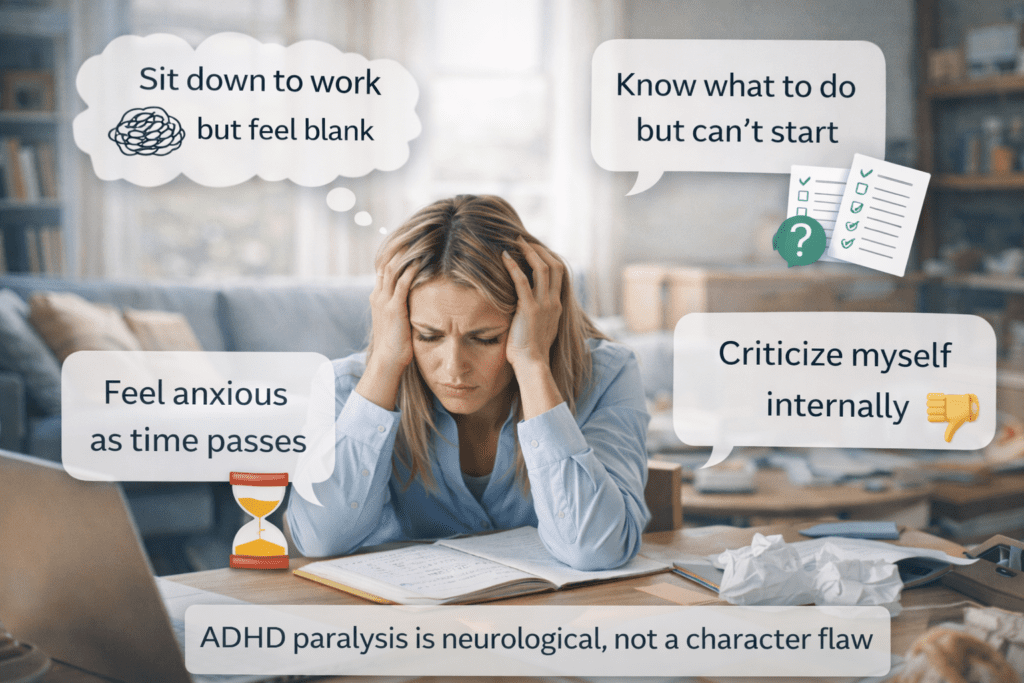
Task paralysis doesn’t always look dramatic.
Often, it feels like quiet frustration.
You may:
- Sit down to work but feel mentally blank
- Know what needs to be done but can’t start
- Feel anxious as time passes
- Criticize yourself internally
Recognizing these signs is the first step toward change.
Simple Ways to Break Task Paralysis (That Actually Work)
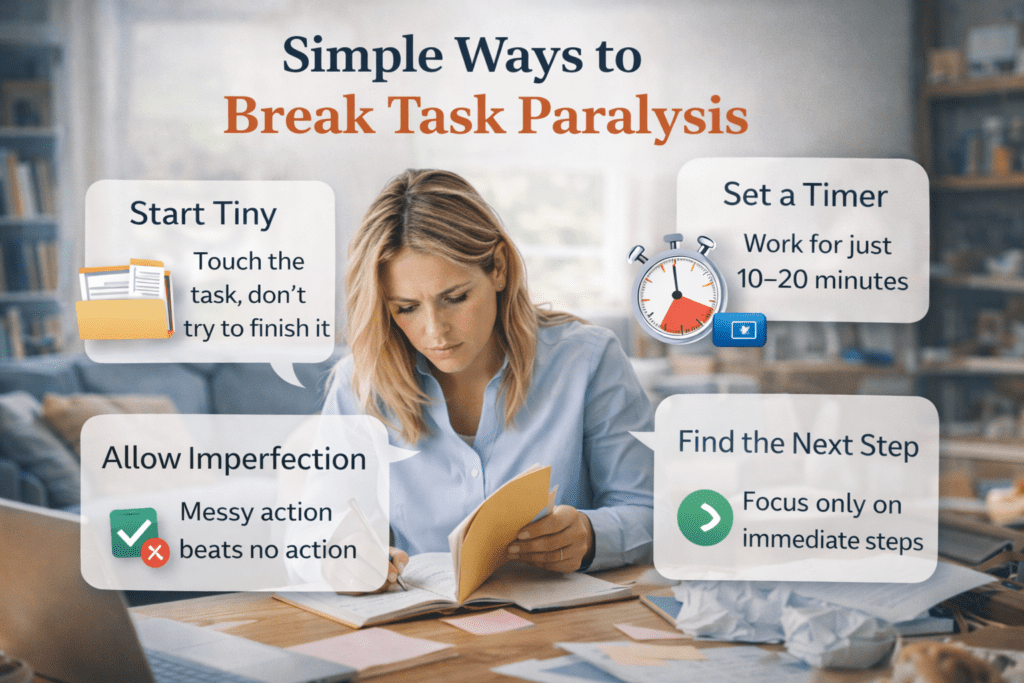
Start Smaller Than You Think You Should
Don’t aim to complete the task.
Aim to touch it.
Examples:
- Open the file
- Write one sentence
- Read one paragraph
Small starts reduce mental resistance.
Use Time Limits, Not Deadlines
Set a 10–20 minute timer and stop when it ends.
This lowers pressure and makes starting easier.
Often, momentum builds naturally once you begin.
Focus on One Step—Not the Outcome
Thinking about the final result increases stress.
Focus only on the next visible step.
Progress comes from direction, not perfection.
Allow Imperfect Work
Waiting for the “right mood” or “perfect plan” keeps paralysis alive.
Messy action is better than no action.
Done is kinder than perfect.
Stuck in task paralysis? Here’s my best strategies for pushing through
Does Medication Help With Task Paralysis?
For some people with ADHD, medication improves focus and mental clarity.
However, medication alone doesn’t solve task paralysis.
Paralysis often involves:
- Emotional overwhelm
- Anxiety
- Poor task structure
The most effective approach combines support, habits, and self-compassion.
Task Paralysis vs Depression: What’s the Difference?
Task paralysis can occur in both ADHD and depression, but the causes differ.
- ADHD paralysis is driven by overwhelm and initiation difficulty
- Depression-related paralysis is linked to low energy and emotional heaviness
If paralysis feels constant or deeply distressing, professional guidance can help clarify the cause.
The 20-Minute Rule: A Gentle Productivity Reset
The 20-minute rule means committing to a task for just 20 minutes, then reassessing.
Why it works:
- Short commitments feel safer
- Starting becomes easier
- Momentum often follows
Even stopping after 20 minutes counts as success.
Why Self-Compassion Matters More Than Motivation
Harsh self-talk increases paralysis.
Kindness reduces it.
Instead of saying:
“I’m wasting time.”
Try:
“I’m overwhelmed—and I’m allowed to start small.”
Your nervous system responds better to safety than pressure.
Read More: How to Refresh Your Living Room: 7 Low-Cost Design Ideas
Key Takeaways
- Task paralysis is common and real
- It’s caused by overload, not laziness
- Small actions break big freezes
- Time limits work better than pressure
- Self-kindness supports progress
Final Thought
You don’t need more discipline.
You need less pressure and clearer steps.
Task paralysis doesn’t mean you’re failing—it means your brain is asking for a gentler approach.
Start small.
Start now.
That’s enough.
FAQs
How to break out of task paralysis (when your mind feels stuck)
To break task paralysis, stop trying to finish the task.
Instead, start with one tiny action—something that takes less than a minute.
Examples:
Open the document
Write one line
Set a 5–10 minute timer
Small actions reduce mental pressure. Once you start moving, your brain often follows. Progress builds after action, not before it.
What is ADHD overwhelm and task paralysis?
ADHD overwhelm happens when too many tasks or decisions hit the brain at once.
Task paralysis is what happens next—the brain freezes instead of acting.
People with ADHD may feel stuck even on simple tasks because:
Priorities feel unclear
Starting feels mentally heavy
Everything feels urgent at the same time
It’s not laziness. It’s overload.
How common is ADHD paralysis?
ADHD paralysis is very common.
Many adults and children with ADHD experience it regularly, especially when tasks are:
Large or unclear
Emotionally stressful
Linked to deadlines
If this happens to you often, you’re not alone—and it’s manageable.
Does ADHD medication help with task paralysis?
ADHD medication can help improve focus and mental clarity, which may make starting tasks easier.
However, medication alone doesn’t always stop task paralysis.
Paralysis can still happen due to:
Anxiety or perfectionism
Poor task structure
Emotional stress
The best results usually come from medication plus simple task strategies.
Is task paralysis ADHD or depression?
Task paralysis can be linked to ADHD, depression, or both.
* With ADHD, paralysis comes from overwhelm and difficulty starting
* With depression, it often comes from low energy or emotional heaviness
If paralysis is constant or getting worse, professional support can help identify the cause.
What is the 20-minute rule for ADHD?
The 20-minute rule means working on a task for just 20 minutes, then stopping or reassessing.
Why it works:
Short time limits feel less threatening
Starting becomes easier
Many people continue once focus kicks in
Even stopping after 20 minutes counts as success.