
Kids Screen Time is reshaping how childhood feels and develops in 2026, as families move beyond simple time limits and begin focusing on balance, emotional health, learning quality, and real-life connection. By understanding how digital habits, sleep, physical activity, social interaction, and guided content work together, parents can avoid common screen-related mistakes and build routines that support confident, healthy growth. A thoughtful approach to technology improves daily behavior, strengthens family relationships, and helps children adapt wisely to an increasingly digital world. At Home Well Zone, we share practical, research-aware parenting insights that help families stay ahead of modern challenges and make smarter, more caring screen-time decisions in 2026.
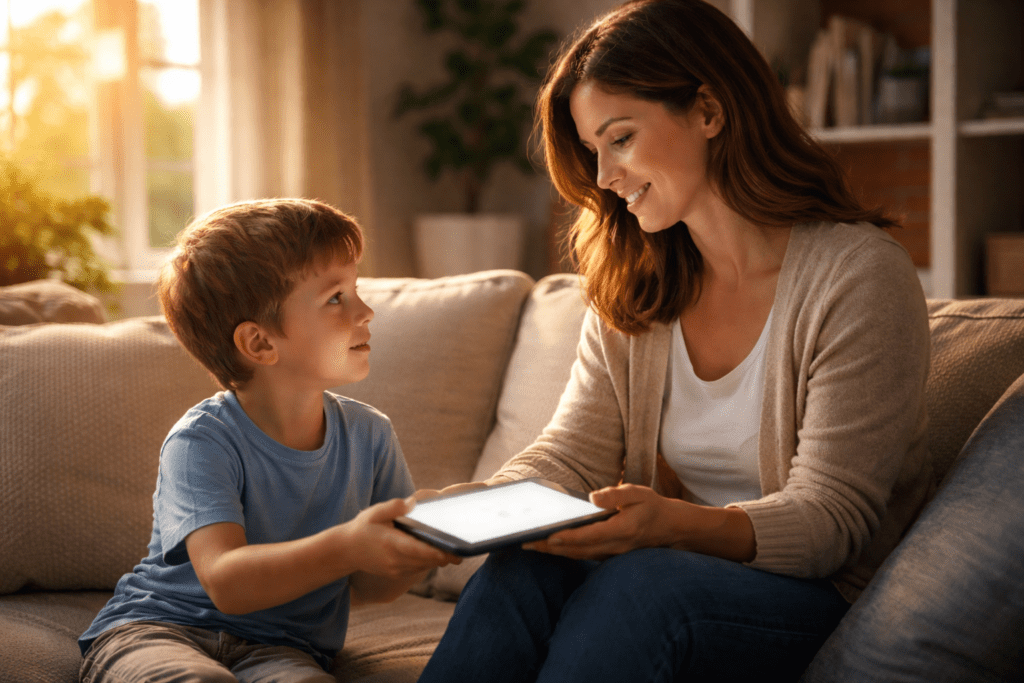
Screens are now part of childhood everywhere.
From cartoons and games to online classes and video calls, children today grow up surrounded by digital devices.
For parents, the real question is no longer whether kids should use screens.
The real challenge is how to guide screen use in a healthy and balanced way.
In 2026, experts agree on one clear truth:
Healthy screen habits are built through balance, not strict limits.
This practical guide explains the newest research, real risks, and simple daily actions parents can use to protect their children’s development in the digital age.
Read More: How Is Screen Time Affecting My Kid?
Kids Screen Time Is Rising Faster Than Ever
Children are starting screen use at very early ages.
Many toddlers interact with phones or tablets before they fully learn to speak, and school-age children often spend hours each day watching videos, gaming, or using social media.
Technology can support:
- Learning and creativity
- Communication with family and friends
- Problem-solving and imagination
But too much unplanned screen use is linked with:
- Poor sleep and tired mornings
- Attention and behavior challenges
- Delays in language and social skills
- Emotional struggles like anxiety or low confidence
The difference is not just time spent, but how screens are used.Kids Screen Time Worries Every Parent Feels
Modern parenting includes digital stress.
Many parents quietly wonder if they are doing the right thing.
Common fears include:
- Harmful or inappropriate online content
- Late-night scrolling that destroys sleep
- Less outdoor play and physical movement
- Emotional dependence on games or videos
These worries are growing because modern apps and platforms are designed to keep children watching longer through auto play, endless scrolling, and constant notifications.
This is why simple rules like “only one hour” are no longer enough.
Families now need smarter guidance, not just stricter limits.
READ MORE: YOGA THERAPY 2026: HOW TO TRANSFORM YOUTH MENTAL HEALTH
Kids Screen Time Affects Each Age Differently
Children’s brains change quickly as they grow.
Screen impact also changes with age.
Early Years (0–3)
Young children learn best from:
- Talking and eye contact
- Physical play
- Real-world exploration
Heavy screen exposure during this stage can reduce chances to build strong language and social skills.
For babies and toddlers, very little screen use is healthiest.
Preschool Stage (3–5)
Short, high-quality educational content can help learning—especially when parents watch together.
But long or unsupervised viewing may:
- Reduce imagination and creativity
- Disrupt sleep
- Slow communication skills
Balance is essential.
Screens should never replace play, reading, or outdoor fun.
School Age (6–12)
Older children use screens for schoolwork, games, and videos.
Research shows heavy use in this stage may connect with:
- Emotional and behavior difficulties
- Lower physical activity
- Increased anxiety in some children
Healthy outcomes appear when screen use is:
- Limited
- Purposeful
- Supervised by parents
Teen Years (13+)
For teenagers, screens shape social life and self-image.
Likes, comments, and online comparison can strongly affect mood and confidence.
Too much use may increase:
- Social anxiety
- Sleep problems
- Feelings of loneliness
At this age, guidance should focus on:
- Honest conversation
- Trust and responsibility
- Teaching smart digital thinking
Screen Time for Kids: Healthy Limits, Quality Content, and Parenting Tips
Kids Screen Time Needs a New Parenting Strategy
Experts in 2026 recommend a balanced digital lifestyle, not strict punishment-style limits.
Three powerful ideas define this modern approach.
Quality Matters More Than Minutes
Helpful screen use includes:
- Educational videos
- Creative apps
- Family movie time with discussion
Harmful use often involves:
- Endless scrolling
- Violent or fast-paced content
- Late-night isolated viewing
- Addictive game rewards
Parents should focus on content and purpose, not only duration.
Discover delightful kids’ stories, young-adult novels, and motivational reads at Ebooks Mart—your trusted home for instant digital books at https://ebooksmart.shop/
Balance Protects Healthy Childhood
Real childhood still depends on:
- Sleep
- Movement
- Face-to-face relationships
- Free imaginative play
When screens replace these essentials, problems begin.
A simple family rule for 2026:
Real life first. Screens second.
Parents Shape Digital Behavior Daily
Children copy what adults do.
If parents scroll constantly or use phones during meals, children learn the same habit.
Healthy parenting means modeling the behavior you want to see.
Kids Screen Time Can Be Reduced With Simple Habits
Small daily changes create powerful long-term results.
Create Screen-Free Spaces
Keep devices out of:
- Bedrooms
- Dining tables
- Family gatherings
This protects sleep, conversation, and emotional bonding.
Build Clear Daily Routines
Gentle, predictable rhythms work better than strict punishment.
Examples:
- Homework before entertainment
- Outdoor play every day
- No screens one hour before bed
Consistency builds self-control naturally.
Watch Together and Talk Often
Co-viewing turns screen time into learning time.
Simple questions help children think:
- “What did you learn?”
- “Was that kind or unkind?”
- “Is this real or pretend?”
This strengthens emotional intelligence and critical thinking.
Delay the First Smartphone
Waiting longer to give a personal phone improves:
- Social confidence
- Emotional control
- School focus
Shared family devices are safer in early years.
Offer Real-World Joy Instead of Screens
Children turn to screens when they feel bored, lonely, or stressed.
Healthy replacements include:
- Sports and outdoor play
- Drawing, crafts, and creativity
- Reading stories
- Family time together
When real life feels exciting, screens lose their control.
Discover delightful kids’ stories, young-adult novels, and motivational reads at Ebooks Mart—your trusted home for instant digital books at https://ebooksmart.shop/
Kids Screen Time Warning Signs Parents Should Notice
Watch for signals such as:
- Anger when devices are removed
- Loss of interest in offline fun
- Sleep problems
- Falling grades
- Social withdrawal
These are not parenting failures.
They are gentle reminders to restore balance with care and calmness.
Kids Screen Time Future Depends on Family Connection
Technology will keep growing.
Artificial intelligence, immersive media, and virtual learning will shape the next generation.
But one truth will never change:
Children need present parents more than perfect rules.
Healthy digital habits grow through:
- Conversation
- Connection
- Consistency
- Love
Not fear.
Kids Screen Time Final Message for Parents
Screens are not the real problem.
Unbalanced screen use is.
The smartest parenting path in 2026 is simple:
- Choose quality over quantity
- Protect sleep, play, and family time
- Stay involved in your child’s digital world
- Lead by example every day
When families protect real connection first,
technology becomes a helpful tool—
not a harmful habit.
DISCLAIMER
Disclaimer
The information provided in this article is for general educational and informational purposes only and is not intended to replace professional medical, psychological or parenting advice. Every child is unique, and screen-time needs may vary based on age, health, development and family circumstances. Parents and caregivers are encouraged to consult qualified healthcare or child-development professionals for guidance specific to their situation. Home Well Zone does not assume responsibility for decisions made based on this content but aims to support families with practical, research-informed insights for healthier digital habits.
FAQs
What is a healthy screen time for a child?
A healthy screen time is balanced, purposeful, and age-appropriate—not simply limited by minutes.
For most children:
Under 2 years: Almost no screen use, except video calls with family
Ages 2–5: Around 1 hour or less per day of high-quality content
Ages 6 and above: Ideally under 2 hours of recreational screen time daily
More important than the number of hours is what the child watches, when they watch, and whether real-life play, sleep, and family time remain protected.
Healthy screen habits always support development—never replace it.
What is the 7-7-7 rule of parenting?
The 7-7-7 rule divides childhood into three emotional stages:
First 7 years: Build love, safety, and attachment
Next 7 years: Teach discipline, values, and responsibility
Final 7 years: Develop friendship, trust, and independence
In the digital age, this rule reminds parents that connection matters more than control.
Strong relationships in early years make it easier to guide screen habits in teenage years.
What is the 3-6-9-12 rule for screen time?
The 3-6-9-12 rule is a simple modern guideline for introducing screens slowly:
Before 3: No personal screens
Before 6: No video games or unsupervised internet
Before 9: No personal smartphone
Before 12: Limited and guided social media use
This approach protects brain development, attention span, and emotional maturity while children grow strong real-world skills first.
What are 5 negative effects of screen time?
Too much screen time can quietly affect many parts of a child’s life.
Common negative effects include:
1. Sleep problems and tired mornings
2. Attention and learning difficulties
3. Reduced physical activity and outdoor play
4. Emotional challenges like anxiety, irritability, or low confidence
5. Weaker social skills due to less face-to-face interaction
These risks increase when screen use is long, unsupervised, or used as emotional escape instead of learning or creativity.
What is the 3-6-9-12 rule for kids?
For kids, the 3-6-9-12 rule is not about punishment—it is about protecting healthy growth.
It helps children:
Build imagination before digital entertainment
Strengthen friendships before social media
Develop confidence before online comparison
Learn responsibility before full digital freedom
Families who follow gradual screen introduction often see better focus, calmer emotions, and stronger real-life relationships.
What happens to a child’s brain with too much screen time?
Excessive screen exposure can overstimulate the visual system while reducing experiences that build:
Language skills
Emotional understanding
Attention control
Social connection
Over time, this imbalance may contribute to:
Anxiety or mood changes
Shorter attention span
Lower sleep quality
Difficulty managing emotions
But the encouraging truth is this:
When families restore balance with sleep, play, conversation, and outdoor life, the brain can recover and grow in healthy ways again.